
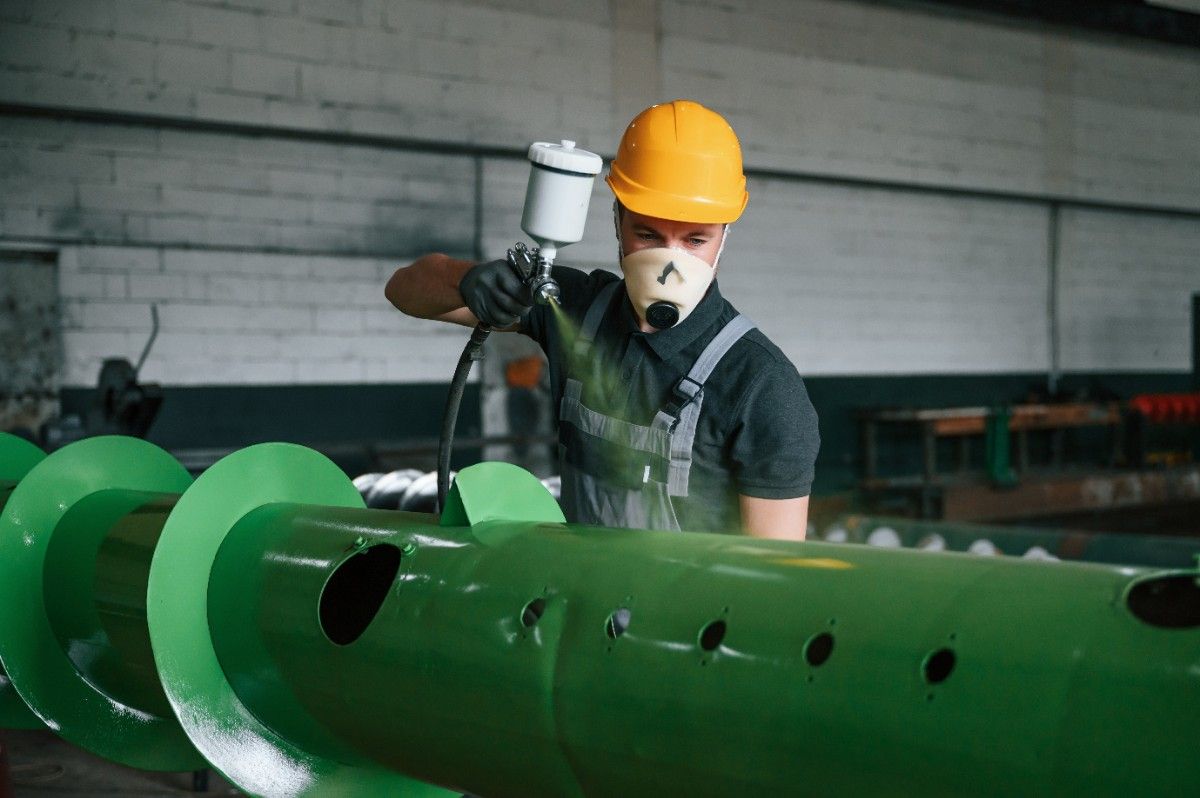
A pipe can be manufactured to handle pressure, load, and flow—but that alone doesn’t guarantee long-term performance. What happens on the surface often decides how well it holds up over time. Exposure to moisture, chemicals, soil conditions, and temperature shifts can gradually affect even high-strength materials. This is where coating pipe becomes part of the bigger picture.
In this blog, we’ll look at what pipe coating involves, the different pipe coating types used across industries, and how industrial pipe coating supports durability and day-to-day performance. To start with, it helps to understand what pipe coating actually involves and why it’s used in the first place.
What Is Pipe Coating?
Pipe coating is essentially a protective applied to the surface of a pipe. Depending on the requirement, it can be applied externally, internally, or on both sides. Its role is fairly direct to create a barrier between the pipe material and the surrounding environment.
In real-world conditions, that barrier helps slow down corrosion, reduces exposure to external elements, and limits wear over time. Without it, pipes tend to deteriorate faster, especially in demanding environments.
Why the Right Pipe Coating Matters
Coating isn’t just an extra step added for protection, it directly affects how a pipe performs once it’s in service. A suitable coating can:
- Limit corrosion caused by moisture or chemicals
- Extend the usable life of the pipe
- Reduce the need for frequent maintenance
- Improve internal flow in certain applications
- Protect against environmental damage
In many systems, the difference between coated and uncoated pipe becomes more noticeable after a few years of operation rather than at the start.
Common Pipe Coating Types
Different environments call for different coatings. There isn’t a one-size-fits-all option, which is why several pipe coating types are used depending on the application.
1. Fusion Bonded Epoxy (FBE)
This is one of the more widely used coatings for corrosion resistance. It’s applied as a powder and forms a strong bond with the pipe surface. You’ll often see it used in pipelines for oil, gas, and water systems.
2. Polyethylene Coating
Typically used where both corrosion and mechanical protection are required. It consists of multiple layers, including epoxy and polyethylene, making it suitable for buried pipelines or areas exposed to physical stress.
3. Coal Tar Enamel (CTE)
An older method that’s still used in certain conditions. It performs well in environments where moisture and soil exposure are constant, such as underground or marine applications.
4. Polyurethane Coating
Known for handling abrasion and chemical exposure. It’s often used in more aggressive environments where surface wear is a concern.
5. Internal Epoxy Coating
Applied to the inside of the pipe, this type of coating helps reduce friction and maintain smoother flow. It’s commonly used in systems where fluid movement and cleanliness matter.
External vs Internal Coating
Pipe coatings are generally grouped into two categories.
External coating focuses on protecting the outer surface from soil, weather, and environmental exposure.
Internal coating, on the other hand, deals with what’s happening inside the pipe—helping reduce corrosion, improve flow, and prevent buildup.
In many projects, both are used together, especially when pipes are exposed to demanding conditions on both sides.
Why Pipe Coating Matters in the Long Run
The effects of missing or inadequate coating don’t usually show up right away. They build up gradually. Without proper protection, pipes are more likely to:
- Corrode
- Develop leaks
- Experience surface damage
- Require more frequent inspection and maintenance
What starts as minor surface wear can eventually affect performance or lead to repairs. Coating helps slow that process. It doesn’t eliminate wear completely, but it does provide a level of protection that keeps the system stable for longer. That’s why coating is often seen as part of long-term planning rather than just an added feature.
Why B&W Pipe is Your Best Choice
Coating tends to work best when it’s considered alongside the pipe itself, not after everything else has been decided.
At B&W Pipe, the focus is not limited to supplying pipe alone. The offering includes rolled and welded pipe across a wide range of sizes, along with services such as inspections, coatings, linings, ROW stringing, and pipeline transitions. This also covers specialized requirements like O.D. concrete weight coating, external coatings, internal linings, and field joint materials.
Looking at pipe and coating together makes it easier to match materials with actual project conditions. In setups where environments change along the pipeline, that kind of alignment helps avoid inconsistencies during installation and use.
Conclusion
Pipe coating plays a quiet but important role in how piping systems perform over time. It supports durability, helps manage exposure to different conditions, and reduces the likelihood of early wear.
While the concept itself is simple, its impact becomes clearer once the system is in use. Choosing the right coating, and pairing it with the right pipe can make a noticeable difference in how smoothly things run over the long term.
FAQs
1. What is pipe coating used for?
It’s used to protect pipes from corrosion, environmental exposure, and general wear.
2. What are the most common pipe coating types?
Fusion bonded epoxy (FBE), polyethylene coatings, coal tar enamel, polyurethane coatings, and internal epoxy linings are commonly used.
3. Is pipe coating required for all applications?
Not in every case, but it’s generally recommended for pipes exposed to moisture, chemicals, or harsh environments.
4. What is the difference between internal and external pipe coating?
External coating protects the outside of the pipe, while internal coating focuses on flow and protection inside the pipe.
5. Does pipe coating affect performance?
Yes. It can improve durability, reduce maintenance, and in some cases, improve flow efficiency.

Patrick Boatright is the President of B&W Pipe Inc., a leading supplier of carbon steel and API line pipe solutions serving the energy, utility, and infrastructure industries across the United States. A graduate of Southwestern University, Patrick brings decades of experience in the pipe and steel industry and has built a reputation for reliability, product knowledge, and delivering high-quality pipe solutions for projects of all sizes. Under his leadership, B&W Pipe has become known for its extensive inventory, hard-to-find products, and commitment to customer service. Patrick specializes in API 5L line pipe, structural pipe, and custom sourcing solutions tailored to the demands of the oil, gas, waterworks, and industrial sectors.