
Current inventory across all three locations
FBE coated pipe is carbon steel pipe protected with a fusion-bonded epoxy powder coating, applied to resist corrosion in buried, submerged, and exposed oil and gas service. B&W Pipe supplies pipe with FBE and other O.D. coatings as part of a combined pipe-and-coating offering, coordinated at the point of order, not tacked on as a separate step with a separate vendor.
What Is FBE Coating?
FBE is a thermoset epoxy powder, electrostatically applied to preheated pipe and then heat-cured, where it melts and fuses directly to the steel surface. The result is a hard, continuous protective barrier bonded to the pipe rather than sitting on top of it as a separate layer.
One property matters more than most buyers realize when specifying a coating for pipeline service: FBE doesn’t block cathodic protection current. Since most buried oil and gas pipelines rely on cathodic protection as a second line of defense against corrosion, a coating that interferes with that current defeats part of its own purpose, which is exactly where FBE holds an advantage over some alternatives.
FBE Coated Pipe Specifications at a Glance
| Spec | Detail |
|---|---|
| Coating Type | Fusion Bonded Epoxy (FBE) |
| Application Method | Electrostatic powder spray, heat-cured |
| Base Pipe | ERW/HFW, DSAW, SMLS, Rolled & Welded |
| Governing Standards | ISO 21809-2 (oil & gas), AWWA C213 (water) |
| Coating Thickness | 12–16 mils (300-400 microns), standard single-layer FBE |
| Cathodic Protection Compatibility | Yes, does not shield CP current |
| Availability | Katy, TX; Houston, TX (Patriot Pipe Services); New Braunfels, TX |
Why FBE Coating Is Used in Oil and Gas Pipelines
- Corrosion resistance in buried and exposed pipeline service, where bare steel would degrade steadily over the life of the asset.
- Cathodic protection compatibility, since FBE doesn't shield CP current the way some thicker or non-conductive coatings can.
- Strong adhesion and abrasion resistance relative to bare steel, holding up through handling, transport, and installation.
For the fuller breakdown of coating types B&W supplies, see our Pipe Coating guide.
FBE Coated Pipe vs. Other Coating Types
| Coating | Cathodic Protection Compatible | Typical Use | Where It’s Favored |
|---|---|---|---|
| FBE | Yes | Oil & gas, water pipelines | Standard choice for buried CP-protected lines |
| Polyethylene (PE) | Limited | Water, gas distribution | Heavier mechanical/impact protection |
| Coal Tar Enamel | Yes | Older buried pipelines | Legacy underground systems, being phased out |
| Polyurethane | Yes | Marine, high-abrasion service | Rocky soil, rough handling environments |
FBE remains the standard specification across most oil, gas, and water pipeline projects because of its CP compatibility and proven long-term performance. Heavier mechanical protection or specific soil conditions are where a buyer might reach for polyurethane or PE instead.
Where FBE Coated Pipe Gets Used
- Oil and gas gathering and transmission lines
- Buried and underground pipeline segments
- Water and wastewater systems, where corrosion protection extends the asset's service life well beyond bare steel.
Pipe and Coating From One Source
Pipe + Coating Together
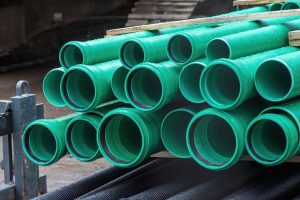
FBE coating is matched to your pipe at the point of order, rather than coordinated separately across two vendors and two shipments.
Full Material Traceability
Mill Test Reports travel with the base pipe, giving your project the documentation trail it needs for compliance and QA records.
Broad Product Line Compatibility
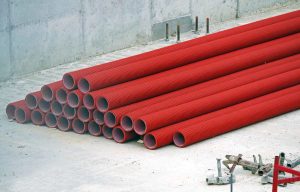
FBE coating is available across B&W Pipe’s ERW/HFW, DSAW, SMLS, and Rolled & Welded product lines.
Three Storage Locations
Inventory and coating support across Katy, Houston (Patriot Pipe Services), and New Braunfels means faster regional fulfillment than a single-yard supplier.
Ordering Process
Step 1 – Contact Sales
Share your pipe size, grade, quantity, and coating requirements
Step 2 – Receive Your Quote
Get pricing and lead time covering pipe and FBE coating together
Step 3 – Confirm & Process
Once approved, your order moves through supply, coating, and inspection
Step 4 – Delivery with Documentation
Pipe arrives coated and ready for installation, with MTRs and coating certification included
Related Resources
Full dimensional reference across NPS and schedule
Verify wall thickness and weight before you order
Current inventory across all three locations
Request an FBE Coated Pipe Quote
Ready to order FBE coated pipe for your project? Contact our team for pricing and lead time.
Frequently Asked Questions
What is FBE coating used for?
FBE coating protects steel pipe from corrosion in buried, submerged, and exposed service, most commonly on oil and gas gathering and transmission lines, and on water and wastewater pipelines.
How does FBE coating protect pipe from corrosion?
FBE forms a hard, continuously bonded epoxy barrier fused directly to the pipe’s steel surface during application, sealing out moisture and oxygen that would otherwise corrode bare steel over time.
Is FBE coated pipe suitable for buried oil and gas lines?
Yes. FBE is one of the most widely specified coatings for buried oil and gas pipelines, largely because it protects the pipe while remaining fully compatible with cathodic protection systems already common on gathering and transmission lines.
Does FBE coating affect cathodic protection?
No. FBE does not block cathodic protection current, which is one of the main reasons it’s favored over coatings that interfere with CP systems in pipeline service.
What's the difference between FBE and polyethylene coating?
FBE is a thin, hard epoxy layer fused directly to the steel and fully compatible with cathodic protection. Polyethylene is a thicker mechanical barrier offering more impact resistance but more limited CP compatibility, making it a better fit where mechanical protection matters more than CP performance.
