
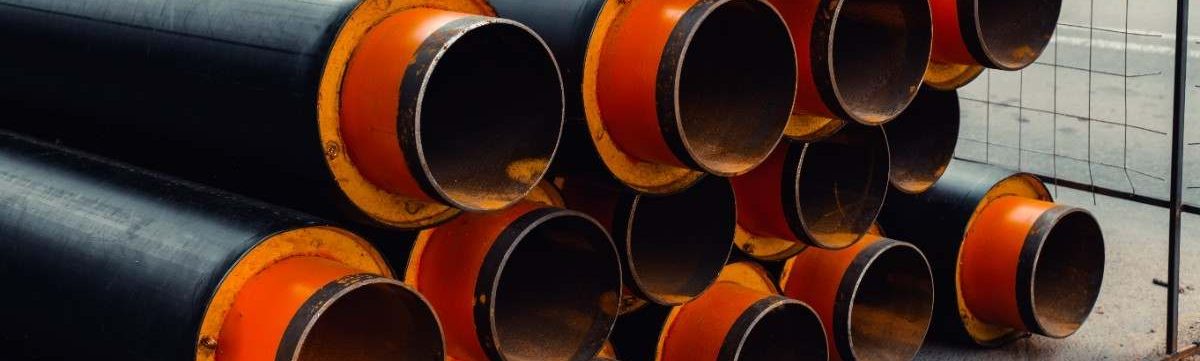
Current inventory across all three locations
Grooved pipe uses a mechanical coupling instead of a welded or threaded joint. A groove is cut or rolled into the pipe near its end, allowing a gasket, housing, and bolts to clamp two sections together securely without heat, without hot work permits, and without waiting on a weld to cool.
B&W Pipe now offers grooving pipe with fast turnaround, giving customers pipe supply and end prep from a single source instead of coordinating two vendors.
What Is Pipe Grooving?
Pipe grooving is the process of machining or rolling a circumferential groove into a pipe’s outer surface near its end, sized precisely to seat a mechanical coupling. Groove dimensions and tolerances are governed by AWWA C606, the industry standard covering both roll-grooved and cut-grooved joints for steel pipe, which is what allows couplings from different manufacturers to seat properly on a correctly grooved pipe. Unlike threading or welding, grooving doesn’t penetrate the pipe wall or require heat, meaning faster field assembly, no fire watch requirement, and a joint that can be disassembled later without cutting the pipe.
| Joining Method | Heat Required | Wall Penetration | Disassembly |
|---|---|---|---|
| Grooved | No | No | Easy |
| Welded | Yes | N/A (fused) | Requires cutting |
| Threaded | No | Yes (cut threads) | Possible, but limited reuse |
Grooving Pipe Specifications at a Glance
| Spec | Detail |
|---|---|
| Grooving Method | Roll grooving and cut grooving |
| Governing Standard | AWWA C606 (groove dimensions and tolerances) |
| Size Range | 2" through 24" NPS (standard AWWA C606 range) |
| Wall Thickness Range | Standard through Schedule 80 |
| Coupling Compatibility | Compatible with AWWA C606-compliant couplings (Victaulic-style) |
| Pipe Types Supported | ERW, DSAW, SMLS, Rolled & Welded |
| Fire Protection Listing | UL Listed / FM Approved couplings supported for NFPA 13 sprinkler applications |
| Turnaround | 24–48 hours on standard sizes |
| Availability | Katy, TX; Houston, TX (Patriot Pipe Services); New Braunfels, TX |
Roll Grooving vs. Cut Grooving
Roll grooving cold-forms the groove by compressing the pipe wall between rollers; no material is removed, which preserves more of the pipe’s original wall thickness. It’s the standard method for pipe from 2″ through 12″ NPS at Standard through Schedule 40 wall.
Cut grooving removes material to machine the groove to depth. It’s used on Schedule 80 and heavier-wall pipe, or larger diameters where roll forming isn’t practical, typically from 12″ through 24″ NPS.
Why Choose Grooved Pipe Joints
- Faster field installation: No hot work permits or fire watch required, which keeps crews moving and avoids permit delays.
- Easier maintenance access: Grooved joints can be disassembled and reassembled without cutting pipe, simplifying future system changes.
- Reliable, pressure-rated performance: A properly grooved and coupled joint, installed to AWWA C606 tolerances, holds working pressures up to 300 psi depending on coupling and pipe size.
Applications for Grooved Pipe
Grooved pipe joints are widely used in:
- Fire protection and sprinkler systems: Governed by NFPA 13, which permits listed grooved joints in sprinkler system installation; fast assembly is critical on code-driven installation timelines.
- HVAC and mechanical piping: Frequent reconfiguration favors a joint that doesn't require cutting
- Water distribution and plumbing systems: Reliable sealing without field welding, commonly specified under AWWA standards for municipal and industrial water systems
Why Source Grooving Pipe from B&W Pipe
Pipe + Grooving From One Source
Order pipe and receive it end-prepped for grooved coupling installation, without coordinating a second vendor or shipping pipe out for prep and back again.
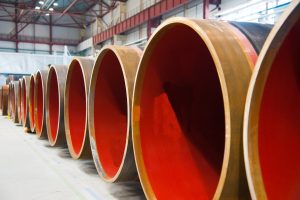
Full Material Traceability
Mill Test Reports and certification travel with the base pipe, giving your project documentation for the material itself.
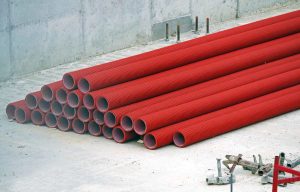
Three Storage Locations
Grooving is performed across B&W Pipe’s Texas yards in Katy, Houston, and New Braunfels, supporting fast regional turnaround.
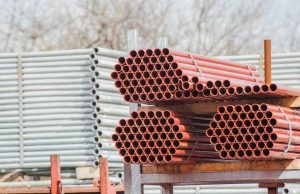
Ordering Process
Step 1 – Contact Sales
Share your pipe size, grade, quantity, and grooving requirements
Step 2 – Receive Your Quote
Get pricing and lead time covering pipe and grooving together
Step 3 – Confirm & Process
Once approved, your order moves through supply and grooving
Step 4 – Delivery with Documentation
Pipe arrives grooved and ready for installation, with MTRs and certification included
Request a Grooving Quote
Ready to order grooved pipe for your project? Contact our team for pricing and lead time.
Frequently Asked Questions
What's the difference between roll grooving and cut grooving?
Roll grooving cold-forms the groove by compressing the pipe wall between rollers, removing no material and preserving more of the original wall thickness. Cut grooving machines material away to form the groove and is typically used on Schedule 80 and heavier-wall pipe where roll forming isn’t suitable. Both methods are governed by AWWA C606 dimensional tolerances so couplings seat correctly.
What size and wall thickness pipe can B&W groove?
B&W Pipe grooves pipe from 2″ through 24″ NPS, standard through Schedule 80 wall thickness, across ERW, DSAW, SMLS, and Rolled & Welded product lines.
Is a grooved joint as reliable as a welded joint?
A properly installed grooved joint, using couplings matched to AWWA C606 groove dimensions, provides a reliable, pressure-rated seal suited to fire protection, HVAC, and water distribution systems, with working pressures up to 300 psi depending on size and coupling. The right joining method depends on the application’s pressure, temperature, and governing code requirements.
Can B&W groove pipe I already ordered from them, or only new orders?
B&W Pipe can groove pipe as part of a new order or on pipe already purchased through B&W. Reach out to sales to confirm scheduling and turnaround for existing orders.
What standard governs grooved pipe joints?
Grooved pipe joints are dimensioned and toleranced to AWWA C606. Fire protection installations using grooved joints must also comply with NFPA 13, which requires listed grooved couplings and fittings for sprinkler system service.
