
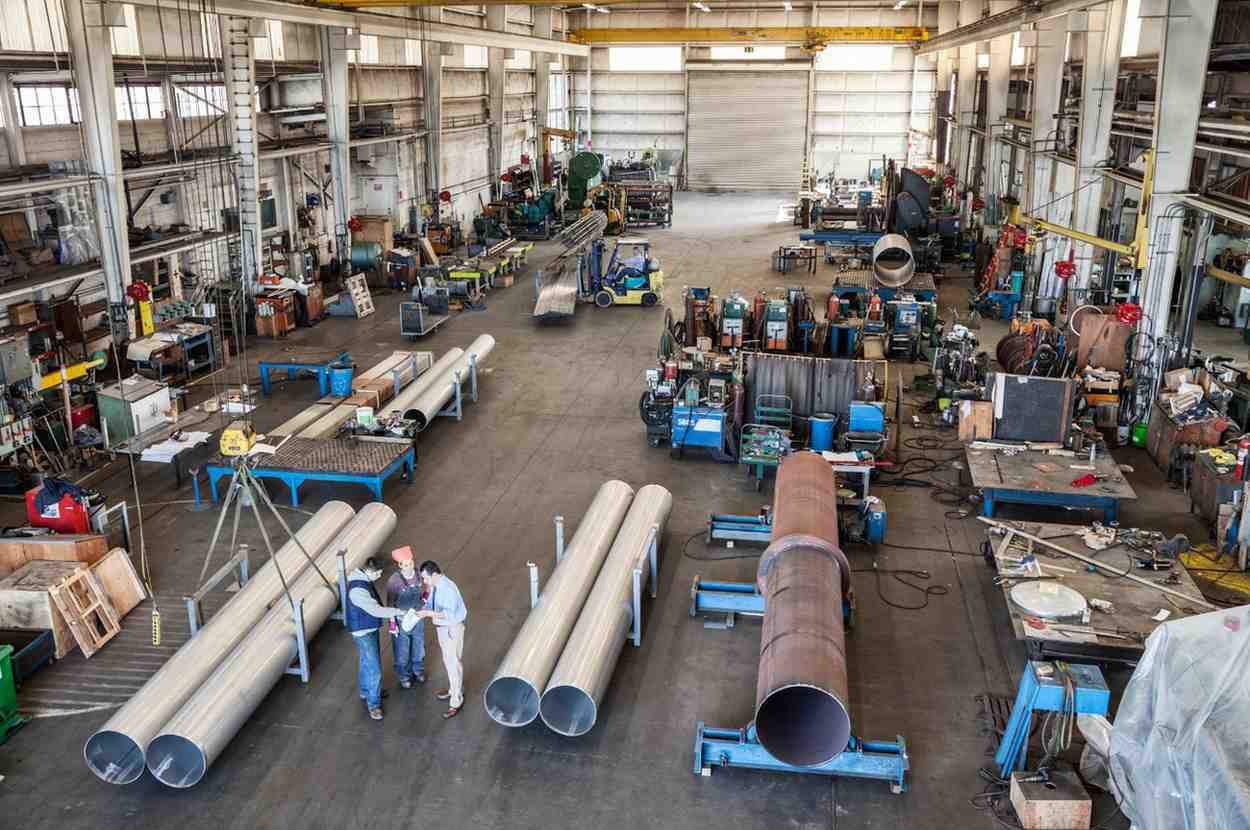
Summary: API 5L is the American Petroleum Institute’s governing standard for line pipe used in oil, gas, and water transmission. This guide covers what API 5L is, how its grades from X42 through X80 differ, key specifications including wall thickness and pressure ratings, primary applications, and how to choose the right grade and manufacturing method for your project before a single foot of pipe is ordered.
Pipeline failures don’t announce themselves in advance. They happen when the wrong grade gets specified for the operating pressure, when a niche size takes twelve weeks to source, and the project sits idle, or when a distributor ships pipe without proper mill test reports and nobody catches it until inspection. Getting API 5L right from the start, grade, size, manufacturing method, and protective system is what separates projects that stay on schedule from ones that don’t.
This guide covers everything engineers, procurement teams, and contractors need to know about API 5L pipe before an order is placed.
What Is API 5L Pipe?
API 5L pipe is a carbon steel line pipe manufactured to the specification published by the American Petroleum Institute, governing the materials, dimensions, mechanical properties, and testing requirements for pipe used in the transmission of oil, gas, and water. It is the gold standard for hydrocarbon gathering and transmission line pipe specification; the industry defaults to it when performance, pressure rating, and long-term reliability are non-negotiable.
The distinction between API 5L and ASTM standards matters in practice. ASTM A53 and A106 cover general service and elevated temperature applications, respectively, but neither is a line pipe standard. API 5L is written specifically for pipeline service; it addresses seam type, grade designation, chemical composition, yield and tensile strength minimums, and hydrostatic testing requirements in a way that general ASTM standards do not. When the application is a gas gathering line, a transmission pipeline, or a water distribution main, API 5L is the correct specification.
API 5L Grades Explained
The “X” grade number in API 5L refers to the specified minimum yield strength (SMYS) of the steel in thousands of psi. X52 means a minimum yield strength of 52,000 psi. X70 means 70,000 psi. As grade increases, yield strength increases, and that has direct implications for pressure rating, wall thickness selection, and project economics.
Grade X42 is the entry-level line pipe grade, suited for lower-pressure gathering lines and applications where design pressure doesn’t demand higher-strength material. It’s less common in new projects but still specified where the pressure class allows it.
Grade X52 is the most widely specified grade for general gas gathering and distribution service. It hits the balance point between strength, weldability, and cost that most mid-range pressure applications require. B&W Pipe carries X52 across ERW and DSAW product lines.
Grade X60 steps up yield strength for longer-distance lines and higher operating pressures, where a lighter wall at higher grade is more economical than a heavier wall at lower grade over miles of pipe.
Grade X65 is a premium grade for high-pressure transmission lines. It’s commonly specified where design pressure and location class push past what X52 and X60 can handle at practical wall thicknesses.
Grade X70 delivers 70,000 psi minimum yield strength and is widely used in high-pressure, long-distance transmission where material efficiency, getting more pressure capacity out of less wall thickness, has a direct impact on project cost at scale. B&W Pipe carries X70 in ERW product lines up to 26″ OD.
Grade X80 is the highest-strength grade in B&W Pipe’s DSAW product line, covering 16″ to 60″ OD for large-diameter, demanding transmission applications where no lower grade meets the pressure and wall thickness requirements.
Choosing the right grade requires knowing the design pressure, location class under ASME B31.8, and the wall thickness that satisfies both the pressure calculation and any corrosion allowance. A higher grade is not always better; it needs to match the application.
API 5L Pipe Specifications
API 5L pipe is available across a wide range of nominal pipe sizes and outside diameters. B&W Pipe’s ERW product line covers 2-3/8″ to 26″ OD, DSAW covers 16″ to 60″ OD, and SMLS covers 2″ to 26″ OD, giving full coverage from small-diameter gathering laterals to large-diameter transmission mains.
Wall thickness in API 5L pipe is selected based on the internal design pressure, the grade’s yield strength, the applicable design factor from ASME B31.8, and any corrosion allowance required. Unlike the ANSI schedule system, API 5L wall thickness is specified directly in inches rather than by schedule designation, giving engineers precise control over the pressure and material efficiency calculation.
Pressure ratings are calculated using the Barlow formula, incorporating OD, wall thickness, SMYS, and the B31.8 design factor for the location class. Chemical composition requirements become more demanding as grade increases; carbon equivalent limits tighten at X65 and above to ensure field weldability is not compromised by higher-strength chemistry.
Mill test reports confirming chemical composition and mechanical properties are standard with every API 5L order through B&W Pipe and are required for code-compliant installations.
Primary Applications of API 5L Pipe
Natural Gas Gathering Lines: This is the primary use case for API 5L. Gathering lines moving gas from wellheads to processing facilities are designed to B31.8 using API 5L grades selected to the design pressure and location class of each segment.
Long-Distance Transmission Pipelines: Higher grades like X65, X70, X80 dominate transmission applications where operating pressures are highest and the economics of wall thickness efficiency matter most over hundreds of miles.
Water Distribution Systems: API 5L pipe with cement mortar lining is a proven specification for municipal water mains, where the combination of carbon steel strength and internal lining delivers service lives exceeding 50 years.
Industrial and Municipal Infrastructure: Beyond oil and gas, API 5L pipe serves industrial process lines and municipal infrastructure where pressure ratings and material consistency are required.
Offshore and Subsea Applications: Specialized grades and testing requirements apply in offshore environments. B&W Pipe’s capabilities include pipe for offshore and piling applications where standard onshore specifications don’t fully cover the service conditions.
Sourcing Hard-to-Find API 5L Sizes and Grades
Standard distributors stock common size and grade combinations. Projects that fall outside those combinations, a specific OD and wall thickness in X65, a large-diameter DSAW order in X80, a rush requirement on a size that isn’t moving through standard channels, run into lead time and availability problems that standard distributors can’t solve.
B&W Pipe was built around this problem. Since 2001, the company has specialized in niche and hard-to-find API 5L sizes and grades alongside standard inventory, with ERW, DSAW, SMLS, and rolled and welded manufacturing options covering the full range of project requirements. For emergency and rush supply needs, having a distributor with deep inventory and established mill relationships is the difference between a project that stays on schedule and one that doesn’t.
API 5L vs. Other Pipe Standards
API 5L vs. ASTM A53: A53 covers general service pipe in ERW and seamless, with a maximum yield strength of 35,000 psi in Grade B. API 5L starts where A53 ends for any application requiring higher strength, longer service life under pressure, or hydrocarbon service. API 5L is the correct standard.
API 5L vs. ASTM A106: A106 is a seamless pipe standard for elevated temperature service, not a line pipe standard. It covers process piping, refineries, and power applications where temperature governs the specification. For pipeline transmission and gathering, API 5L applies.
API 5L vs. Schedule 40: Schedule 40 is a dimensional designation, not a material standard. API 5L pipe is specified by grade and wall thickness in inches, not by schedule. The two aren’t competing specifications; a pipe can be both API 5L and dimensionally equivalent to a schedule designation, but the API 5L grade governs the pressure performance.
Cost Factors in API 5L Pipe Pricing
Base material cost increases with grade: X70 costs more per foot than X52 at the same diameter and wall thickness, reflecting the higher-strength steel chemistry required. Manufacturing method also affects price: SMLS pipe carries a premium over ERW for the same size and grade due to the production process.
Protective pipe coatings add cost that is project-specific: FBE for external corrosion protection, ARO for abrasive terrain, and cement mortar lining for water service. Volume and bulk ordering reduce per-unit cost meaningfully on large projects, and lead time requirements affect pricing when mill or rush sourcing is involved. B&W Pipe can work through a project-specific cost breakdown on request.
Why Choose B&W Pipe for Your API 5L Supply
B&W Pipe has specialized in API 5L line pipe from Katy, Texas, since 2001, serving gas, water, and industrial infrastructure projects across the region and beyond. Our inventory covers ERW, DSAW, SMLS, and rolled and welded pipe across grades from GR B through X80, with niche and hard-to-find sizes available when standard stock doesn’t match the project requirement.
Services include FBE coating, ARO, cement mortar lining, third-party inspection and testing, ROW stringing, and pipeline transition support, everything needed to get API 5L pipe specified, protected, and in the ground correctly.
Call (281) 391-6688, email–sales@bwpipe.biz, or visit–bwpipeinc.com to check current stock, download the pipe chart, or request a project-specific quote.
Frequently Asked Questions
Q.1 What does the “X” grade number actually mean?
It refers to the specified minimum yield strength of the steel in thousands of psi. X52 has a minimum yield strength of 52,000 psi. X70 has 70,000 psi. Higher grade means higher strength, which allows more pressure capacity at a given wall thickness.
Q.3 Can I downgrade from X70 to X65 to save costs?
Only if the design pressure calculation still passes at X65 with the specified wall thickness. Downgrading grade without recalculating pressure capacity against B31.8 requirements is not a substitution; it’s a specification change that requires engineering review.
Q.3 How often should API 5L pipe be inspected?
Inspection frequency depends on the applicable code, operating pressure, fluid type, and the operator’s integrity management program. ASME B31.8 and federal pipeline safety regulations set minimum requirements. B&W Pipe supports third-party inspection at the point of supply, but in-service inspection intervals are governed by the operator’s program.
Q.4 What is the expected lifespan of an API 5L pipe?
Properly specified, coated, and installed API 5L pipe in gas and water service has a demonstrated service life of 50 years and beyond. Service life depends on design margins, protective system quality, soil conditions, and operating pressure relative to the design pressure.

Patrick Boatright is the President of B&W Pipe Inc., a leading supplier of carbon steel and API line pipe solutions serving the energy, utility, and infrastructure industries across the United States. A graduate of Southwestern University, Patrick brings decades of experience in the pipe and steel industry and has built a reputation for reliability, product knowledge, and delivering high-quality pipe solutions for projects of all sizes. Under his leadership, B&W Pipe has become known for its extensive inventory, hard-to-find products, and commitment to customer service. Patrick specializes in API 5L line pipe, structural pipe, and custom sourcing solutions tailored to the demands of the oil, gas, waterworks, and industrial sectors.