
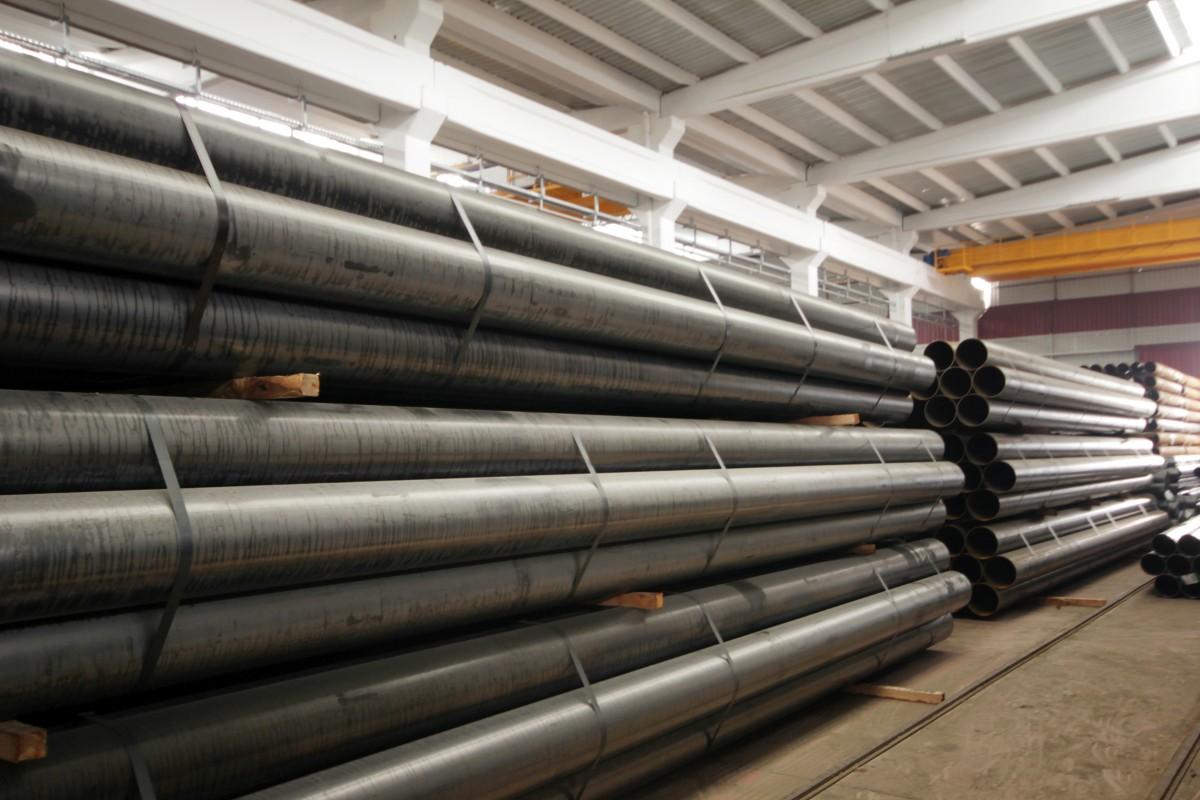
Summary: Schedule 40 steel pipe is the most widely specified carbon steel pipe for general industrial service, used in natural gas distribution, water systems, compressed air lines, and structural applications. This guide covers what schedule 40 is, how it compares to other schedules, its technical specifications, primary applications, advantages, limitations, and installation considerations to help you make the right material decision before anything goes in the ground.
Choosing the wrong pipe schedule isn’t a small oversight. It can mean a failed pressure test, a code violation, or a rework job that costs more than the original material. In industrial applications, whether you’re laying a natural gas gathering line across Texas or running compressed air through a facility, the schedule designation on your pipe is one of the first decisions that ripples through every other part of the project.
That’s why engineers, procurement teams, and contractors spend real time on schedule selection. And no schedule gets specified more often, in more applications, across more industries than Schedule 40. This guide explains what it is, where it fits, and where it doesn’t, so you can make that call with confidence before anything goes in the ground.
What Is Schedule 40 Steel Pipe?
Schedule 40 steel pipe is a carbon steel pipe with a standardized wall thickness defined by ANSI/ASME B36.10, designed for general-service industrial applications, including gas, water, compressed air, and steam lines. The “schedule” designation refers to the relationship between a pipe’s outer diameter (OD) and its wall thickness (WT) at any given nominal pipe size (NPS), a system created to bring consistency across manufacturers and make pressure calculations reliable.
Schedule 40 is the baseline for most standard industrial work: wall thickness substantial enough to handle moderate internal pressure, without the added cost and weight of heavier schedules. Wall thickness varies by NPS, 0.154″ at 2″ NPS, 0.216″ at 4″ NPS, and 0.330″ at 12″ NPS, with standardized OD combinations recognized across all manufacturers. You can verify exact specifications using B&W Pipe’s pipe chart calculator, available on their website.
How Schedule 40 Differs from Other Schedules
Pipe schedules exist on a spectrum from lighter walls designed for low-pressure service to extremely heavy walls built for demanding high-pressure environments. Here’s a practical comparison of the schedules you’ll encounter most often:
| Schedule | Wall Thickness (relative) | Typical Use Case |
| Schedule 20 | Light | Low-pressure water, casing, non-critical service |
| Schedule 40 | Standard | General service: gas, water, compressed air, steam |
| Schedule 80 | Heavy | Higher-pressure service, corrosive environments |
| Schedule 160 | Extra heavy | Very high-pressure, extreme-duty applications |
Specifying lighter than required is a safety failure. Specifying heavier than needed wastes money on material, freight, and installation labor.
One common misconception: “Schedule 40” and “Standard (STD)” are used interchangeably, and they are equivalent up to 10-inch NPS. Above 10 inches, STD holds at a fixed 0.375″ wall while Schedule 40 continues to increase. Always verify actual wall thickness on larger-diameter pipe rather than assuming equivalence.
Technical Specifications of Schedule 40 Steel Pipe
Material Composition
Schedule 40 is produced in carbon steel, and the grade is an independent specification that works alongside the schedule to determine what the pipe can actually handle. ASTM A53B covers general service in ERW and seamless forms, with a minimum yield strength of 35,000 psi.
ASTM A106B/C (seamless only) is used for elevated temperature service. API 5L grades from GR B through X70 apply to hydrocarbon gathering and transmission, with yield strength scaling up significantly as grade increases.
Pressure Ratings
Pressure capacity in schedule 40 steel pipe depends on three variables working together: the wall thickness (set by the schedule), the yield strength of the steel (set by the grade), and the applicable design standard (ASME B31.8 for gas distribution, B31.4 for liquid pipelines, B31.3 for process piping).
Elevating temperatures above the pipe’s rated service range requires derating, meaning the maximum working pressure at 200°F is lower than at ambient temperature.
Dimensional Specifications
For common sizes in NPS:
| NPS | OD (inches) | Wall Thickness (inches) | Weight (lb/ft) |
| 2″ | 2.375 | 0.154 | 3.65 |
| 4″ | 4.500 | 0.237 | 10.79 |
| 6″ | 6.625 | 0.280 | 18.97 |
| 8″ | 8.625 | 0.322 | 28.55 |
| 12″ | 12.750 | 0.330 | 43.77 |
Manufacturing Methods
Schedule 40 steel pipe is manufactured through several methods, each with distinct performance characteristics:
ERW (Electric Resistance Welded) pipe is produced by rolling flat steel strip into a cylinder and welding the seam using electrical resistance heat, no filler metal required. B&W Pipe carries ERW in grades from ASTM A500B and A53B up through API 5L GR B to X70, in ODs ranging from 2-3/8″ to 26″.
DSAW (Double Submerged Arc Welded) pipe uses submerged arc welding on both the interior and exterior seam, making it well-suited for larger diameter applications. B&W Pipe’s DSAW range covers 16″ to 60″ OD in ASTM A53B and API 5L GR B through X80.
SMLS (Seamless) pipe is extruded from a solid billet with no weld seam, which gives it a structural and pressure advantage in high-temperature and high-pressure service. B&W Pipe carries seamless in ASTM A106B/C and API 5L GR B through X65, from 2″ to 26″ OD.
Quality Standards
Schedule 40 pipe produced to ASTM or API standards comes with certified mill test reports (MTRs) confirming material chemistry and mechanical properties. These are typically required for code-compliant installations and third-party inspection, and B&W Pipe supplies them as standard with their carbon steel inventory.
Primary Applications of Schedule 40 Steel Pipe
Natural Gas Distribution
Schedule 40 steel pipe is one of the most common materials in gas gathering and distribution systems, particularly for lower-pressure lines where B31.8 design requirements are satisfied without oversizing. Many gathering applications B&W Pipe serves across Texas fall in the Schedule 20 to Schedule 40 range, specified in appropriate API 5L grades.
Water Systems
Municipal and industrial water distribution lines frequently rely on schedule 40, where operating pressures are moderate. Combined with cement mortar lining, a service B&W Pipe offers, internal corrosion is managed over the pipe’s full service life.
Compressed Air and Vacuum Lines
Industrial facilities running compressed air or vacuum systems routinely specify schedule 40 for lines where operating pressure stays within its rated capacity. It’s a cost-effective choice that’s well-understood by facility engineers and maintenance personnel.
Steam Lines (Low to Moderate Pressure)
Low- to moderate-pressure steam service falls within schedule 40’s capacity in ASTM A53B or A106 grades. For elevated temperature applications, A106B/C is the appropriate call.
Structural and Piling Applications
Not all pipes carry pressurized fluid. In structural and piling work, schedule 40 carbon steel pipe serves as a load-bearing member. B&W Pipe’s capabilities include custom rolled and welded pipe for offshore and piling applications where standard stock doesn’t match the structural requirement.
Petroleum and Chemical Industries
For petroleum gathering lines and chemical service within schedule 40’s pressure and temperature limits, it remains a cost-effective and accepted specification. Applications that exceed those limits step up to Schedule 80 or heavier, often in seamless construction.
Advantages and Limitations of Schedule 40 Steel Pipe
Advantages
Schedule 40 is cost-effective for the broad middle range of industrial piping applications. It’s the most widely stocked schedule in carbon steel, which means shorter lead times, more competitive pricing, and easier sourcing when schedules shift mid-project.
Its wall thickness satisfies most low- to moderate-pressure applications without over-engineering. It’s standardized across manufacturers, so dimensional compatibility isn’t a concern when sourcing from multiple mills. And it’s the specification that engineers and contractors have worked with for decades; the documentation, welding procedures, and inspection protocols around it are mature.
Limitations
Schedule 40 has real limits, and misapplying it is how problems start. It is not suitable for high-pressure applications; those belong in Schedule 80, Schedule 160, or XXS territory, depending on what the design pressure calculation demands. Carbon steel corrodes, and schedule 40’s wall doesn’t offer unlimited corrosion allowance; in aggressive soil or fluid environments, coatings like Fusion Bonded Epoxy (FBE) and internal linings are necessary to make the service life math work.
At elevated temperatures, pressure ratings must be derated, and not every specification engineer remembers to account for that. And in vibration-prone environments near compressors, high-velocity flow conditions, water hammer situations, heavier wall pipe, and better support spacing become important.
Installation and Maintenance Considerations
Handling and Connection
Carbon steel pipe can sustain damage during transport that isn’t always visible, such as dents, gouges, and coating damage that compromise performance under pressure. Proper lifting equipment, end protection, and laydown procedures matter before the pipe ever sees service. Schedule 40 connects by threading (for smaller sizes), welding (the standard for gas and liquid line work), or mechanical coupling. Welding procedures must be qualified for the actual wall thickness and grade in use.
Support Spacing
Steel pipe sags between supports, and the acceptable span depends on OD, wall thickness, the weight of the pipe plus contents, and allowable deflection. Support spacing should be calculated per the applicable code, as under-supported lines develop stress concentrations that accelerate failure.
Corrosion Protection
This is where B&W Pipe’s service capabilities connect directly to schedule selection. Fusion Bonded Epoxy (FBE) is one of the most effective external corrosion systems for buried carbon steel pipe. When FBE is properly applied, the corrosion allowance built into the wall can often be reduced because the coating is doing the protective work.
Abrasion-Resistant Overcoat (ARO) is applied over FBE in rocky or abrasive installation environments. Cement mortar lining addresses internal corrosion in water lines. All three are available through B&W Pipe, and sourcing pipe and coating from the same supplier means those decisions are made together, not in separate conversations with separate vendors.
ROW Stringing
For pipeline installations, right-of-way stringing, laying pipe along the route ahead of welding and lowering in is where field handling discipline matters most. B&W Pipe offers ROW stringing as a service, ensuring pipe arrives in the right location and sequence, reducing double-handling and the risk of pre-installation damage.
Get the Right Pipe for Your Project
B&W Pipe has been sourcing and supplying carbon steel pipe from Katy, Texas, since 2001, specializing in API 5L line pipe, niche and hard-to-find sizes, and offshore and piling applications. Our product line covers ERW, DSAW, SMLS, and rolled and welded pipe, with full-service capabilities including third-party inspection, FBE coating, ARO, cement mortar lining, and ROW stringing.
If you need to confirm specs for schedule 40 steel pipe, our pipe chart and calculator are free resources on the website. If you’re working through a specification and want to talk about grades and schedule selection with people who’ve been doing it for over two decades, the team is ready.
Call (281) 391-6688, email sales@bwpipe.biz, or visit bwpipeinc.com to download the current stock list, access the pipe chart calculator, or request a quote.
Frequently Asked Questions
Q1. Is schedule 40 steel pipe suitable for buried gas lines?
Yes, provided the design pressure, location class, and B31.8 design factors are satisfied at the specified schedule and grade. Many buried gas gathering lines in Texas run on schedule 40 in API 5L grades. FBE coating is typically applied for external corrosion protection on buried installations.
Q2. What is the difference between Schedule 40 and Schedule 80 for high-pressure applications?
Schedule 80 has a thicker wall than Schedule 40 at every NPS size, which gives it a higher pressure rating for the same grade of steel. If your design pressure calculation pushes past what schedule 40 can handle at your specified grade, Schedule 80 is the next step. For extreme pressures, Schedule 160 or XXS may be required.
Q3. Can a schedule 40 steel pipe be threaded in the field?
Yes, for smaller NPS sizes. Threading reduces the effective wall thickness at the joint, so it’s important to verify that the remaining wall after threading still meets the pressure requirements for the application. For larger sizes and higher-pressure service, welded connections are the standard.
Q4. Does B&W Pipe supply schedule 40 in hard-to-find sizes?
Yes. B&W Pipe specializes in niche and hard-to-find sizes alongside standard inventory. If a size isn’t in current stock, our team can source or custom-produce it through rolled and welded pipe capabilities. Check the current stock list on our website or contact the team directly.

Patrick Boatright is the President of B&W Pipe Inc., a leading supplier of carbon steel and API line pipe solutions serving the energy, utility, and infrastructure industries across the United States. A graduate of Southwestern University, Patrick brings decades of experience in the pipe and steel industry and has built a reputation for reliability, product knowledge, and delivering high-quality pipe solutions for projects of all sizes. Under his leadership, B&W Pipe has become known for its extensive inventory, hard-to-find products, and commitment to customer service. Patrick specializes in API 5L line pipe, structural pipe, and custom sourcing solutions tailored to the demands of the oil, gas, waterworks, and industrial sectors.