
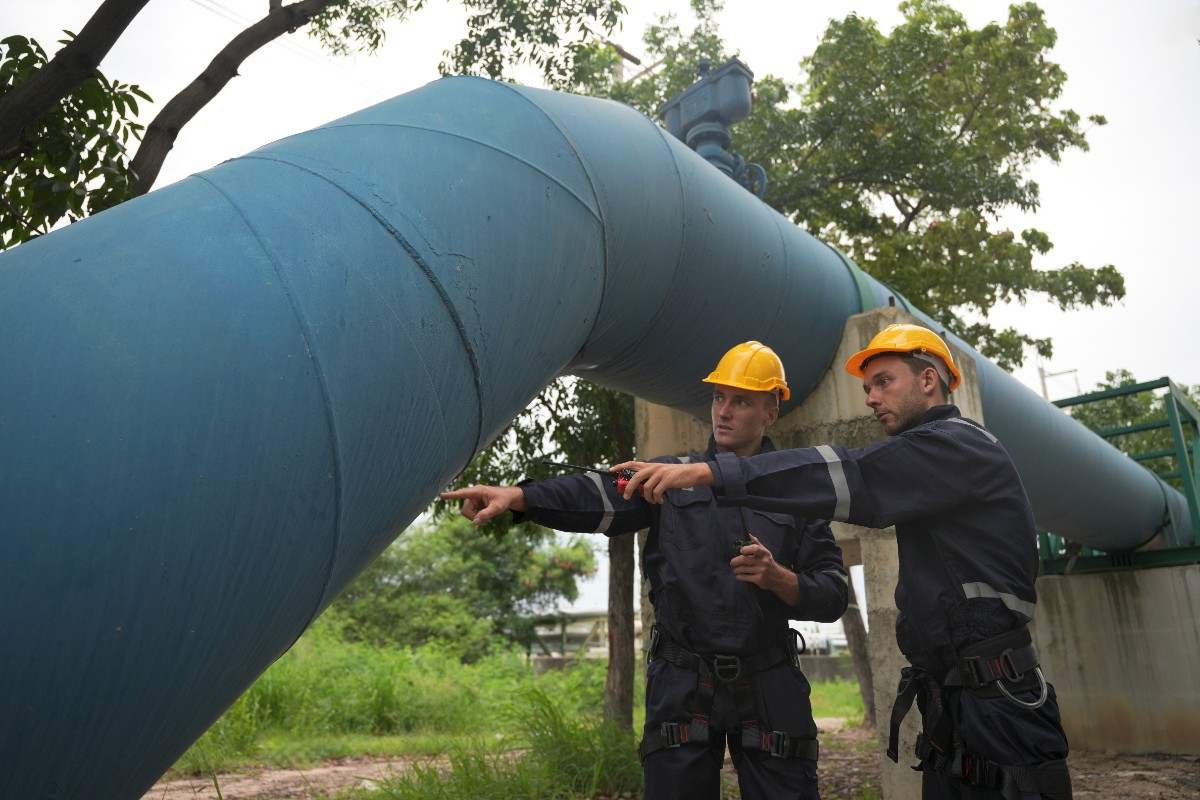
Summary: Pipeline corrosion prevention relies on multiple methods working together rather than any single fix: protective coatings, cathodic protection, internal linings, material and grade selection, corrosion inhibitors, and ongoing inspection. Coatings like FBE isolate steel from the environment, while wall thickness and grade add corrosion allowance. B&W Pipe supports coating, lining, grade, and inspection; cathodic protection and chemical inhibitors are handled by specialized contractors.
Pipeline corrosion prevention relies on a combination of methods working together: protective coatings, cathodic protection, material and grade selection, corrosion inhibitors, and ongoing inspection, rather than any single method alone. No single layer of protection is designed to carry a pipeline’s entire service life on its own; each method covers a different failure mode, and together they form the layered approach the industry actually relies on.
This guide walks through the major methods used for pipeline corrosion protection, how they work together, and where B&W Pipe fits into that picture as a supplier of coated, certified pipe.
Why Pipelines Corrode ?
Bare carbon steel reacts with moisture, oxygen, and the chemistry of the surrounding soil or water. Left unprotected, that reaction steadily eats away at the pipe wall, a slow process above ground, but one that accelerates significantly in buried or submerged service, where the steel sits in constant contact with moisture and soil.
Corrosion on pipelines is one of the leading causes of pipeline integrity failures across the industry, which is exactly why prevention gets designed into a project from the start rather than addressed after a problem shows up. Retrofitting pipeline corrosion prevention onto an already-degrading line is far more expensive and disruptive than specifying the right coating, grade, and inspection plan before the pipe goes in the ground.
Method 1: Protective Coatings
Coatings are the first line of defense; they physically isolate the steel from the environment that would otherwise corrode it. The most common options include:
- FBE (Fusion Bonded Epoxy): a thermoset epoxy fused directly to the steel, widely used for its cathodic protection compatibility
- Polyethylene (PE): a thicker mechanical barrier, favored where impact resistance matters more than CP compatibility
- Coal Tar Enamel: a legacy coating still found on older buried pipelines, largely phased out on new construction
- Polyurethane: used in marine and high-abrasion environments
For the full comparison between these coating types, see our Pipe Coating guide. For a deeper look at FBE specifically, including specs and where it’s used, see FBE Coated Pipe for Oil and Gas Applications.
Method 2: Cathodic Protection
Cathodic protection (CP) works differently from a coating; instead of physically blocking corrosion, it applies a small electrical current to the pipeline that counteracts the electrochemical reaction causing corrosion in the first place. This is typically done through sacrificial anodes (a more reactive metal that corrodes in place of the pipe) or impressed current systems (an external power source driving the protective current).
CP and coating choice are directly connected. A coating that blocks or interferes with CP current defeats part of the system’s purpose, which is exactly why FBE is favored on buried pipelines relying on cathodic protection, since it doesn’t shield that current the way some thicker coatings can.
Method 3: Internal Linings
Coatings protect a pipe’s exterior, but some applications need protection on the inside too. Cement mortar lining, applied to AWWA specifications, protects the interior of water pipelines from internal corrosion the same way an external coating protects the outside.
Internal protection matters most in water and wastewater service, where the pipe is in constant contact with the fluid it carries. Dry gas transmission lines generally face a different, lower internal corrosion risk profile, so internal lining decisions depend heavily on what the pipeline is actually carrying.
Method 4: Material and Grade Selection
Corrosion prevention isn’t only about what’s applied to the pipe; the pipe’s own specification plays a role too. Higher API 5L grades and corrosion-resistant alloys get specified where service conditions call for extra margin.
Wall thickness matters here as well. A thicker wall, whether through schedule selection or corrosion allowance built into the design, simply gives the pipe more material to lose before corrosion compromises its structural integrity. This is the same logic covered in our Schedule 40 vs Schedule 80 Steel Pipe Thickness Compared guide: a thicker wall isn’t just about pressure rating; it’s also a corrosion-life decision.
Method 5: Corrosion Inhibitors
In some systems, particularly gathering lines carrying produced water or sour gas, chemical corrosion inhibitors are injected directly into the line to reduce internal corrosion. This method sits outside B&W Pipe’s direct product and service scope; it’s included here for a complete picture of how the industry approaches pipeline corrosion prevention, not as something B&W provides directly.
Method 6: Inspection and Monitoring
No prevention method is truly “install and forget.” Ongoing inspection and monitoring confirm that coatings, cathodic protection, and material choices are actually holding up over time. This includes third-party inspection of materials and welds, along with periodic wall thickness testing and pigging to verify a line’s condition without taking it out of service.
How These Methods Work Together
Real-world pipeline corrosion protection isn’t a choice between these methods; it’s a combination of them. A typical buried gas gathering line might run FBE-coated pipe, an appropriate API 5L grade with corrosion allowance built into the wall thickness, a cathodic protection system installed by a specialized contractor, and periodic third-party inspection over its service life.
For a buyer specifying pipe, the decisions that matter most at the point of order are coating and grade; those get built into the pipe itself. Cathodic protection, inspection cadence, and inhibitor treatment are decisions that continue after installation, managed separately from the pipe purchase itself.
How B&W Pipe Supports Pipeline Corrosion Prevention
B&W Pipe supports several of these methods directly:
- FBE and other O.D. coatings, matched to pipe at the point of order
- Cement mortar lining and field joint material, for water pipeline projects
- API 5L grade range and MTR certification, supporting material-based corrosion allowance decisions
- Third-party inspection support, confirming material and coating quality before pipe leaves the yard
To be clear about scope: cathodic protection system design and installation, along with chemical pipeline corrosion prevention inhibitor treatment, are outside B&W Pipe’s direct services. B&W’s role is supplying the coated, certified, correctly-graded pipe that these other systems are built around.
Frequently Asked Questions
1. What are the main methods of pipeline corrosion prevention?
The main methods are protective coatings, cathodic protection, internal linings, material and grade selection, corrosion inhibitors, and ongoing inspection. Most real-world pipelines use a combination of several of these rather than relying on just one.
2. Does coating alone prevent pipeline corrosion?
Coating significantly reduces corrosion risk but isn’t typically relied on alone. Coatings can develop holidays (small gaps or defects) over time or during installation, which is why cathodic protection is commonly paired with coating on buried pipelines as a backup layer of protection.
3. How does cathodic protection work with coated pipe?
Cathodic protection applies a small electrical current to counteract the corrosion reaction. It works best alongside a coating that doesn’t block that current; FBE is a common choice for this reason, since it remains fully compatible with cathodic protection systems.
4. Does pipe grade or wall thickness affect corrosion resistance?
Grade itself doesn’t significantly change corrosion resistance for standard carbon steel, but wall thickness does; a thicker wall provides more corrosion allowance, meaning more material can be lost to corrosion over time before the pipe’s structural integrity is compromised.
5. Does B&W Pipe offer cathodic protection?
No. B&W Pipe supplies CP-compatible coated pipe, but cathodic protection system design and installation is specialized work handled by dedicated CP contractors, not part of B&W’s own services.

Patrick Boatright is the President of B&W Pipe Inc., a leading supplier of carbon steel and API line pipe solutions serving the energy, utility, and infrastructure industries across the United States. A graduate of Southwestern University, Patrick brings decades of experience in the pipe and steel industry and has built a reputation for reliability, product knowledge, and delivering high-quality pipe solutions for projects of all sizes. Under his leadership, B&W Pipe has become known for its extensive inventory, hard-to-find products, and commitment to customer service. Patrick specializes in API 5L line pipe, structural pipe, and custom sourcing solutions tailored to the demands of the oil, gas, waterworks, and industrial sectors.