
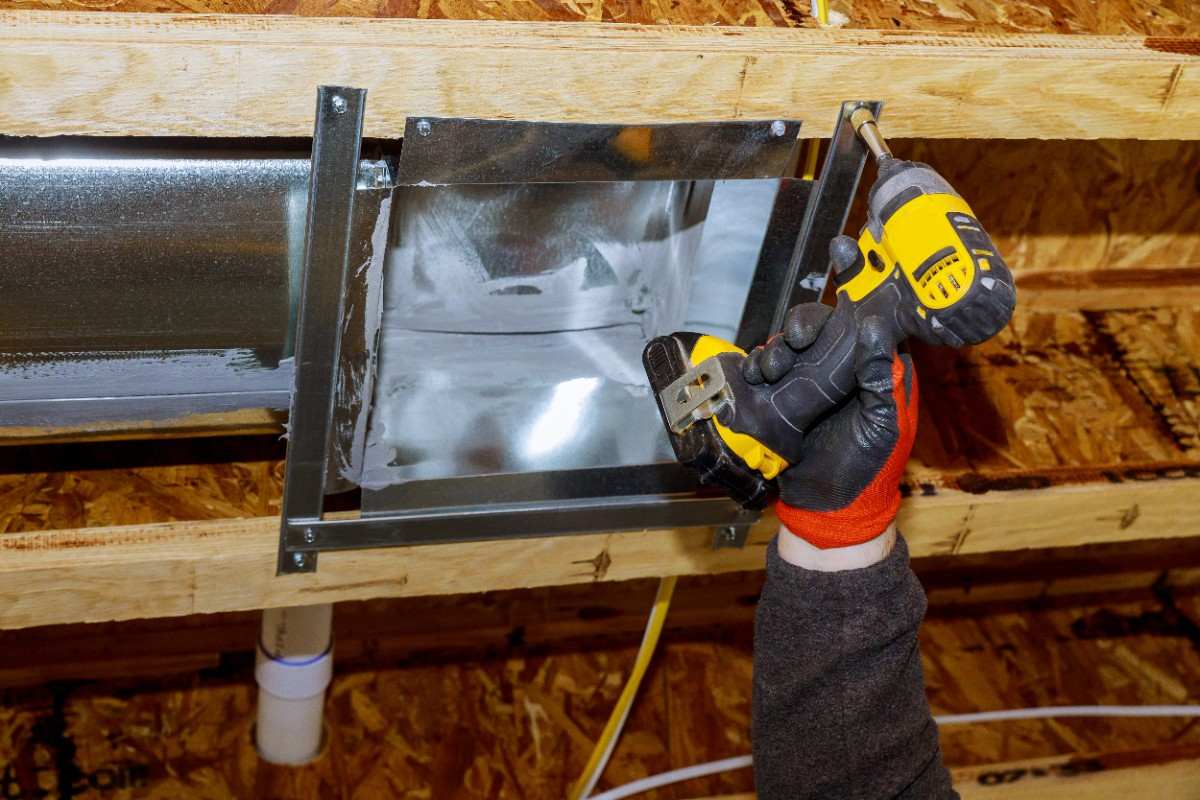
Summary: To install firestop pipe collars, match the collar to the listed fire-rated system, prepare the opening, wrap the collar around the plastic pipe, latch it, set it flush to the wall or floor, and anchor it with the specified fasteners. Each collar works only inside its tested system, so the listing decides size, placement, and anchoring.
A plastic pipe passing through a fire-rated wall or floor is a weak point. When fire reaches it, the pipe softens and burns away, and the opening it leaves lets flame and smoke through. A firestop pipe collar closes that opening. Done right, the collar restores the rating of the wall or floor. Done wrong, it can fail the inspection or fail in a fire.
This guide shows how to install firestop pipe collars step by step, what to check before you start, and the mistakes that cause failed inspections. It also explains why steel pipe is handled differently, which is where B&W Pipe fits in.
What Is a Firestop Pipe Collar?
A firestop pipe collar is a steel shell lined with intumescent material that wraps around a combustible pipe. When heat softens and burns away the pipe, the intumescent liner expands inward and seals the opening, blocking fire and smoke from passing through the assembly.
Collars are designed for combustible pipe such as PVC, CPVC, ABS, and similar plastics. They work in open systems, such as vented drain lines, and in closed systems, such as water supply lines, as long as the collar is listed for the pipe and the assembly.
When Firestop Pipe Collars Are Required
Building codes require firestopping wherever a pipe penetrates a fire-rated wall, floor, or ceiling assembly. The goal is to keep the assembly’s fire rating intact after the hole is cut. You will need a collar when:
- A plastic pipe passes through a rated wall or floor
- The tested system for that assembly calls for a collar
- A retrofit adds a new pipe through an existing rated assembly
The tested system, usually a UL-classified system, names the collar, the pipe, and the assembly together. That listing is the rulebook for the installation.
Before You Install: What to Check
Five checks prevent most installation problems:
- Pipe material and size. The collar must be listed for the pipe type and trade size.
- Assembly type and rating. Confirm whether the wall or floor is gypsum, concrete, or masonry, and what hour rating it carries.
- The listed system. Find the system number and read its installation details.
- Annular space. The gap between the pipe and the edge of the opening must fall within the listing’s limits.
- Tools and materials. Gather the collar, supplied anchors, a drill, and any sealant the listing requires.
Skipping the listing check is the most common mistake. The collar is only one part of the system, so a perfectly installed collar in the wrong system still fails.
How to Install Firestop Pipe Collars: Step by Step
Follow the manufacturer’s instructions and the listed system for your assembly. The general sequence looks like this:
- Confirm the system and collar size: Match the collar to the pipe’s outside diameter and to the listed assembly.
- Prepare the opening: Clean the penetration and confirm the annular space is within the listed limits.
- Fill the annular space if required: Some listings call for firestop sealant or caulk around the pipe before the collar goes on. Use only the product named in the listing.
- Open the collar and wrap it around the pipe: Most collars have a latch or toggle that opens so the shell can wrap around a pipe already in place.
- Close the latch: The collar should grip the pipe snugly with no gaps in the shell.
- Position the collar flush: Slide it tight against the wall surface or the underside of the floor, as the listing shows.
- Anchor the collar: Fasten the mounting tabs to the substrate with the anchors and spacing the listing specifies.
- Repeat on the second side if required: Many wall systems call for a collar on both sides, while many floor systems call for one on the underside.
This is how to install firestop pipe collars on most penetrations. The details change by product, so treat the listing as the final word.
Wall vs. Floor Installation
| Factor | Wall Penetration | Floor Penetration |
|---|---|---|
| Typical collar placement | Both sides of the wall, per listing | Underside of the floor, per listing |
| Position | Flush against the wall surface | Flush against the ceiling or slab underside |
| Common substrates | Gypsum, concrete, masonry | Concrete slab, concrete over metal deck |
| Anchoring | Fasteners suited to the wall material | Fasteners suited to concrete or deck |
| Key check | Rating of the wall assembly | Rating of the floor assembly |
Anchor type matters as much as collar placement. A fastener that works in concrete may not hold in gypsum, and the listing specifies which is acceptable.
Common Installation Mistakes
- Wrong collar size or pipe type. The collar must be listed for the exact pipe.
- Skipping the annular space fill. When the listing requires sealant, leaving it out voids the system.
- Mixing manufacturers’ components. Collars, sealants, and anchors are tested together, so substituting parts breaks the listing.
- Collar not flush to the surface. A gap between the collar and the assembly reduces its ability to seal.
- Too few or the wrong anchors. The listing sets the number and type of fasteners.
- Installing on the wrong side. Placement follows the system, not convenience.
Inspection and Documentation
After installation, check that every collar is latched, flush, and anchored. Confirm the annular fill is in place where required and that the penetration matches its listing.
Keep the system number and product data on file for the inspector. Many projects also label each penetration with the listed system, the date, and the installer. Good records make inspection faster and protect the owner later.
Steel Pipe Penetrations: Why Collars Are Not Used
Collars solve a problem that steel pipe does not have. Steel is noncombustible, so it does not burn away and leave an opening. A penetration with carbon steel pipe is generally firestopped with listed sealants or mortar systems instead of an intumescent collar.
That is the dividing line for B&W Pipe. B&W supplies carbon steel pipe, including ERW, DSAW, and seamless line pipe, along with industrial pipe fittings, with mill test reports and full material traceability on every order. Plastic pipe and the collars that go with it fall outside that product line, but steel pipe running through rated assemblies is exactly the pipe B&W supplies. For the full range, see our Industrial Pipe Fittings page and our guide to Steel Pipe vs Steel Tube.
Frequently Asked Questions
Q.1 Where are firestop pipe collars required?
Collars are required where combustible pipe, such as PVC, CPVC, or ABS, passes through a fire-rated wall, floor, or ceiling assembly and the listed system calls for one.
Q.2 Can one firestop collar be used on any pipe material?
No. Each collar is listed for specific pipe materials and sizes. Using it on an unlisted pipe breaks the tested system.
Q.3 Do you need a collar on both sides of the wall?
Often yes. Many wall systems call for a collar on each side, while floor systems usually call for one on the underside. The listed system gives the exact requirement.
Q.4 Do steel pipe penetrations need firestop collars?
Generally no. Steel does not burn away, so steel penetrations are usually sealed with listed firestop sealants or mortar instead.
Q.5 How do you know the collar matches the fire rating?
Check the UL-classified system for the assembly. It names the collar, pipe, and assembly together and states the rating the installation achieves.

Patrick Boatright is the President of B&W Pipe Inc., a leading supplier of carbon steel and API line pipe solutions serving the energy, utility, and infrastructure industries across the United States. A graduate of Southwestern University, Patrick brings decades of experience in the pipe and steel industry and has built a reputation for reliability, product knowledge, and delivering high-quality pipe solutions for projects of all sizes. Under his leadership, B&W Pipe has become known for its extensive inventory, hard-to-find products, and commitment to customer service. Patrick specializes in API 5L line pipe, structural pipe, and custom sourcing solutions tailored to the demands of the oil, gas, waterworks, and industrial sectors.