
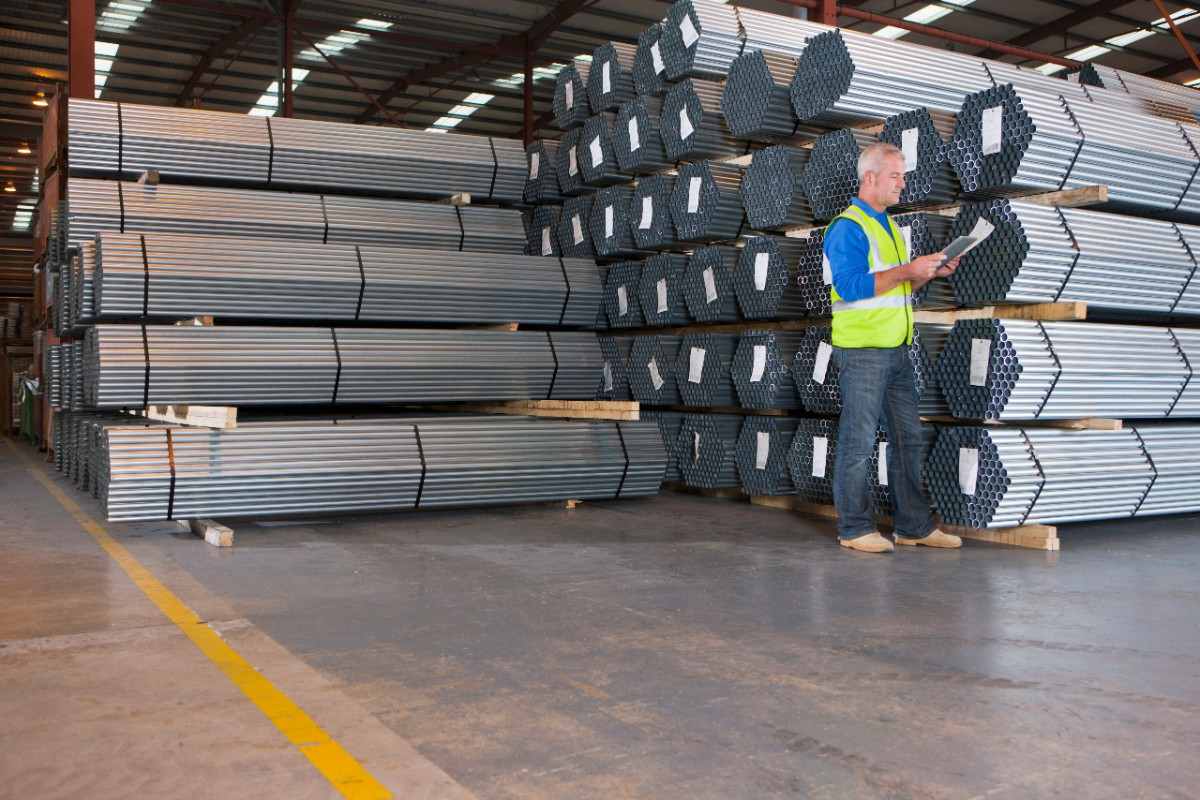
Summary: Low carbon steel contains roughly 0.05 to 0.25 percent carbon, which makes it ductile, easy to weld and form, and affordable, with a density near 7.85 g/cm³. It is the base material for most line pipe, structural shapes, and plate, which is why it dominates pipelines and construction.
Most people touch low carbon steel every day without knowing it. It is in the frame of the building you work in, the body panels of your car, the steel pipe carrying natural gas to your stove, and the nails in your toolbox. It is the most widely produced form of steel in the world, and the reasons come down to a short list of properties.
This guide covers what is low carbon steel, its composition and properties, the density of low carbon steel, the main types and grades, and where each is used. It also covers where low carbon steel falls short and how those limits are managed.
What Is Low Carbon Steel?
Low carbon steel is steel with a carbon content of about 0.05 to 0.25 percent. The rest is mostly iron, with small amounts of manganese and silicon added for strength and cleaner processing. Because carbon is what hardens steel, a low carbon level leaves the metal soft, ductile, and easy to shape.
You will often see it called mild steel or plain carbon steel. In practice, the three terms overlap heavily. Mild steel is the everyday name, while “low carbon steel” is the more technical way to say the same thing.
Carbon content is how steel is sorted into families:
| Steel Type | Carbon Content | General Character |
|---|---|---|
| Low carbon (mild) | 0.05–0.25% | Ductile, weldable, easy to form |
| Medium carbon | 0.25–0.60% | Stronger, harder, less formable |
| High carbon | 0.60–1.0%+ | Very hard, wear resistant, brittle |
Low Carbon Steel Properties
Low carbon steel properties vary with grade and processing, but these typical values give a working picture:
| Property | Typical Value | What It Means in Service |
|---|---|---|
| Carbon content | 0.05–0.25% | Keeps the steel soft and weldable |
| Density | 7.85 g/cm³ | Sets weight for pipe, plate, and structure |
| Yield strength | 250–350 MPa (36–50 ksi) | Load it carries before permanent deformation |
| Tensile strength | 400–550 MPa (58–80 ksi) | Maximum stress before fracture |
| Elongation | 20–30% | Stretches and bends before breaking |
| Hardness | 110–170 HB | Soft enough to cut and form easily |
| Weldability | Excellent | Welds without special preheat in most cases |
| Machinability | Good | Cuts cleanly with standard tooling |
| Magnetism | Magnetic | Responds to magnets |
| Thermal conductivity | 50 W/m·K | Conducts heat well |
| Melting range | 1,425–1,540°C | Typical of carbon steels |
Treat these as ranges. A cold-drawn bar will test stronger than a hot-rolled plate of the same nominal grade, and microalloyed pipe steel can exceed the yield range shown here.
Density of Low Carbon Steel
The density of low carbon steel is about 7.85 g/cm³, which equals 7,850 kg/m³ or 0.284 lb/in³. In US units, that works out to roughly 490 pounds per cubic foot.
Density turns volume into weight, and weight drives freight, handling, and structural loads. Two quick examples show how it works:
- Steel plate: A square foot of plate that is 1/2 inch thick holds 72 cubic inches of steel. Multiply by 0.284 lb/in³, and it weighs about 20.4 pounds.
- Steel pipe: A 6″ Schedule 40 pipe has about 5.6 square inches of steel in its cross section. Over one foot, that is roughly 67 cubic inches, or about 19 pounds per foot.
B&W’s Pipe Formulas page includes a weight-per-foot calculator that does this math for any size and wall.
Low Carbon Steel Types and Grades
Low carbon steel types are usually grouped by grade family and product form. The plain low carbon grades come first. Grades 1008 and 1010 sit at the lowest end, with roughly 0.05 to 0.13 percent carbon, and are supplied mostly as sheet, strip, and wire for stamping and drawn parts.
Grades 1018 and 1020 carry about 0.15 to 0.23 percent carbon and come as bar, plate, and tube for shafts and general fabrication. Structural grades such as A36 allow up to about 0.26 percent carbon and are rolled into plate, beams, angles, and pipe for framing, bridges, and supports.
Pipe grades sit at the upper edge of the range. A53 and A106 Grade B cap carbon at about 0.30 percent, so they are often described as low-to-medium carbon, and they are used for process and utility piping in both seamless and welded form.
API 5L grades, from Grade B through X70, are the line pipe grades for oil, gas, and water pipelines. The higher API 5L grades reach their strength through microalloying and controlled rolling instead of added carbon, which is how they stay weldable in the field. For the full breakdown, see our guides to Pipe Grades Explained and API 5L Pipe Specifications.
Hot rolled and cold rolled describe how the steel is processed, not separate steels. Hot rolled low carbon steel is formed at high temperature and has a rougher surface finish. Cold rolled steel is finished at room temperature, which tightens tolerances, improves the surface, and raises strength.
What Is Low Carbon Structural Steel?
Low carbon structural steel is low carbon steel specified for load-bearing use. A grade earns the “structural” label by guaranteeing a minimum yield strength, welding well in the field, and holding up under the loads buildings and bridges carry.
ASTM A36 is the classic example, with a minimum yield of 36 ksi and good weldability. It shows up in beams, plate, angles, channels, and structural pipe. Structural pipe is the version most relevant to pipe buyers, and B&W’s Hot Rolled Steel Pipe for Structural Applications page covers that product line.
Advantages of Low Carbon Steel
- Weldability. Low carbon content keeps the steel from hardening and cracking at the weld, so field welding is routine.
- Formability. It bends, rolls, and forms into pipe, sheet, and shapes without fracturing.
- Cost and availability. It is the cheapest structural steel to produce and the easiest to source.
- Ductility and toughness. It deforms before it breaks, which gives structures warning before failure.
- Machinability. It cuts and drills cleanly with standard tools.
- Recyclability. Steel is recycled at very high rates with no loss of quality.
Limitations of Low Carbon Steel
- Corrosion. Unprotected low carbon steel rusts. It has no chromium to form a protective oxide layer, so it depends on coatings, linings, or galvanizing in wet or buried service.
- Lower hardness. It wears faster than high carbon steel and is a poor choice for cutting edges or heavy abrasion.
- Limited heat treatment response. There is too little carbon for ordinary quench hardening. It can be surface hardened by carburizing, strengthened by cold working, or normalized and annealed for grain control.
Corrosion is the limit that matters most in piping, and the fix is well established. Our guides to pipe coating and methods of preventing pipeline corrosion cover how coatings, cathodic protection, and linings protect low carbon steel pipe for decades.
Where Low Carbon Steel Is Used
| Industry | Typical Product | Why Low Carbon Steel Fits |
|---|---|---|
| Oil, gas, and water | Line pipe | Weldable in the field, strong enough for pressure, low cost per foot |
| Construction | Beams, plate, structural pipe | Predictable strength and easy fabrication |
| Automotive | Body panels and sheet | Forms into complex shapes |
| Manufacturing | Fasteners, wire, stampings | Ductile and easy to work |
| Fabrication | Fittings, flanges, frames | Welds and machines readily |
Why Low Carbon Steel Dominates Pipe and Pipeline Work
Pipelines are built in the field, one weld at a time, over hundreds of miles. Low carbon chemistry is what makes that practical. Welds cool without hardening into brittle zones, and crews can weld in the field without elaborate preheating on most wall thicknesses.
The higher API 5L grades show how far low carbon steel can be pushed. Small additions of niobium, vanadium, or titanium, combined with controlled rolling, raise yield strength to X70 levels while the carbon stays low. That combination of strength and weldability is why gas and water transmission lines rely on it.
Why B&W Pipe Is Worth Knowing About
B&W Pipe is a Texas-based carbon steel pipe distributor that has supplied line pipe and structural pipe since 2001. The range covers ERW, DSAW, and seamless pipe in API 5L grades from B through X70, with mill test reports on every order. If your project calls for pipe built on these low carbon grades, B&W Pipe can match grade and size to the job. Send B&W Pipe your fitting types, sizes, quantities, and pressure requirements, and the team will quote them with full documentation.
Frequently Asked Questions
Q.1 What is low carbon steel?
Low carbon steel is steel containing roughly 0.05 to 0.25 percent carbon. That low carbon level makes it ductile, easy to weld and form, and inexpensive, which is why it is the most widely used steel.
Q.2 What is the density of low carbon steel?
About 7.85 g/cm³, which is 7,850 kg/m³ or 0.284 lb/in³. In US units, that is roughly 490 pounds per cubic foot.
Q.3 What are the main types of low carbon steel?
The main types are plain low carbon grades such as 1008, 1010, 1018, and 1020, structural grades such as A36, and pipe grades such as A53, A106, and API 5L. Each can be supplied hot-rolled or cold-rolled.
Q.4 Is low carbon steel the same as mild steel?
In everyday use, yes. Mild steel is the common name for low carbon steel, and both refer to steel with a low carbon content that is soft, ductile, and easy to weld.
Q.5 Can low carbon steel be heat treated?
Not by ordinary quench hardening, because it has too little carbon to harden that way. It can be case-hardened by carburizing, strengthened by cold working, and normalized or annealed to refine its grain.
Q.6 Is low carbon steel good for welding?
Yes. It is one of the most weldable steels because its low carbon content resists hardening and cracking in the weld zone.
Q.7 What are the main uses of low carbon steel?
Line pipe, structural beams and plate, automotive body panels, fasteners and wire, and general fabrication. Pipelines and construction are the largest uses.

Patrick Boatright is the President of B&W Pipe Inc., a leading supplier of carbon steel and API line pipe solutions serving the energy, utility, and infrastructure industries across the United States. A graduate of Southwestern University, Patrick brings decades of experience in the pipe and steel industry and has built a reputation for reliability, product knowledge, and delivering high-quality pipe solutions for projects of all sizes. Under his leadership, B&W Pipe has become known for its extensive inventory, hard-to-find products, and commitment to customer service. Patrick specializes in API 5L line pipe, structural pipe, and custom sourcing solutions tailored to the demands of the oil, gas, waterworks, and industrial sectors.